Author: Vaidya Dhyan Prakash Tripathi (Ayurvedacharya – BAMS, 40+ Years of Clinical Experience)
Last Updated: July 2026
⚠️ Medical Disclaimer:
This article is intended solely for educational and public health awareness purposes. It is not a substitute for professional medical advice, diagnosis, or treatment. Always consult a qualified physician or gastroenterologist for any liver-related concerns or diagnostic evaluations.
Table of Contents
- Introduction: The Rising Strain of Desk Jobs on Liver Health
- What Is MASLD? (Modern Fatty Liver)
- Research Insights: IT Sector Study by AIG Hospitals
- The 4 Stages of Liver Damage
- Understanding Lean Fatty Liver
- 4 Essential Lifestyle Habits for Desk Workers
- Recommended Diagnostic Tests
- Frequently Asked Questions (FAQs)
The Rising Strain of Desk Jobs on Liver Health
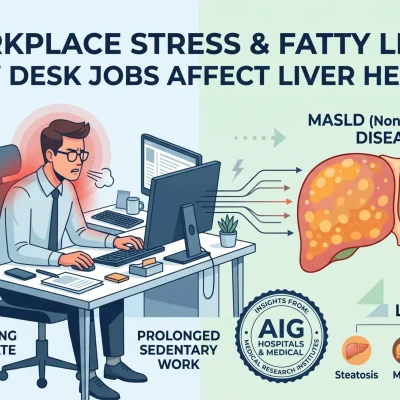
Across major urban centers, working professionals—particularly those in demanding IT and corporate roles—are increasingly struggling with fatty liver disease.
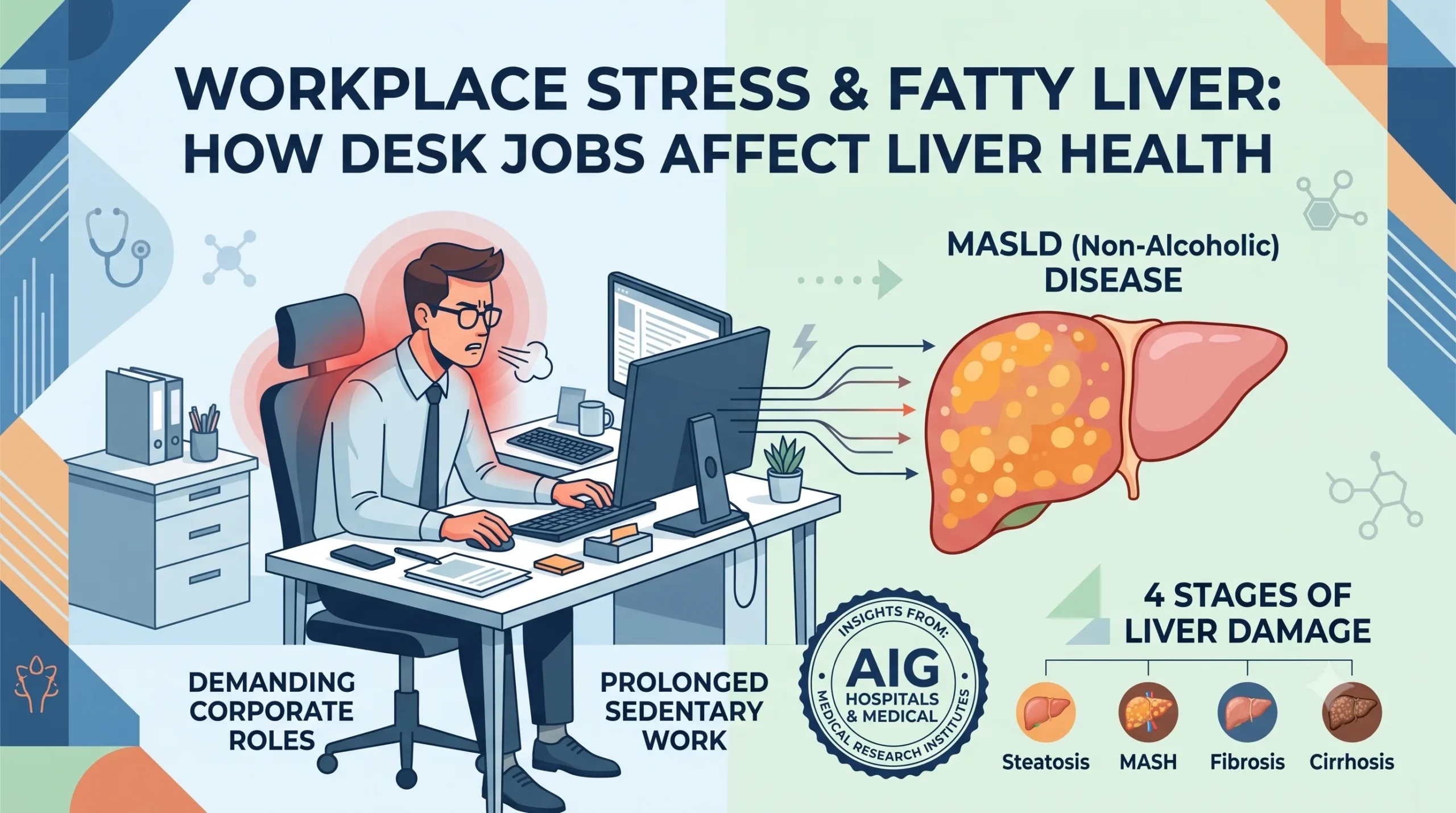
Sitting at a desk for 8 to 10 hours continuously, limited physical activity, chronic workplace stress, disrupted sleep patterns, and frequent consumption of processed foods are putting an unprecedented strain on liver function. Fatty liver is no longer confined to heavy alcohol consumption; it has evolved into a primary lifestyle-driven medical concern among young working adults.
What Is MASLD? (Modern Fatty Liver)
Medical consensus now uses the term MASLD (Metabolic Dysfunction-Associated Steatotic Liver Disease)—formerly categorized as NAFLD (Non-Alcoholic Fatty Liver Disease)—to describe fatty liver driven by metabolic factors.
How It Develops
When daily intake of refined carbohydrates, ultra-processed foods, and trans fats exceeds the body’s daily energy expenditure, excess calories accumulate as fat droplets inside liver cells (hepatocytes). Left unmanaged over time, this fat accumulation leads to localized cellular damage and tissue inflammation.
Research Insights: IT Sector Study by AIG Hospitals
To analyze the direct correlation between modern desk jobs and hepatic metabolic changes, leading medical researchers conducted a clinical study on working corporate professionals.
Primary Research Institute:
- Asian Institute of Gastroenterology (AIG Hospitals), Hyderabad
Key Findings from the Study:
The clinical investigation evaluated 345 IT professionals and highlighted significant metabolic shifts caused by prolonged sedentary work environments:
[ AIG Hospitals Study Findings ]
├── 84.06%  ---> Fatty Liver Accumulation (MASLD / MAFLD)
├── 76.52%  ---> Elevated LDL (Bad Cholesterol)
├── 34.20%  ---> Metabolic Syndrome
└── 20.87%  ---> High Fasting Blood Glucose
Takeaway: The combination of uninterrupted sitting, chronic mental stress, and irregular sleeping patterns increases the risk of hepatic fat accumulation by 3 to 4 times in desk-bound workers.
The 4 Stages of Liver Damage
- Simple Steatosis (Fat Accumulation): Extra fat accumulates inside liver cells without triggering significant inflammation. This stage is fully reversible through targeted diet and lifestyle changes.
- MASH (Metabolic Dysfunction-Associated Steatohepatitis): Fat accumulation progresses to active cellular inflammation and tissue damage within the liver.
- Fibrosis: Persistent, long-term inflammation creates structural scarring along liver blood vessels and surrounding tissue.
- Cirrhosis: Advanced structural scarring impairs broad organ function, significantly raising the risk of long-term liver failure.
Understanding Lean Fatty Liver
A common misconception is that fatty liver only affects individuals who are noticeably overweight. Lean Fatty Liver (or “Thin Fatty Liver”) occurs in individuals with a normal Body Mass Index (BMI) who carry visceral fat surrounding their internal abdominal organs.
Self-Assessment Screening Questions:
- Do you have accumulated fat around your central abdomen?
- Waist Circumference Thresholds:
- Greater than 35.5 inches in men?
- Greater than 31.5 inches in women?
- Do you spend more than 6 cumulative hours sitting per day?
If you answered yes, routine liver screening is advisable regardless of overall body weight.
4 Essential Lifestyle Habits for Desk Workers
1. The 60-Minute Micro-Break Rule
Avoid sitting continuously for over 60 minutes. Stand up and move around for 5 minutes every hour to clear glucose and active triglycerides from the bloodstream.
2. Dietary Adjustments
- Reduce refined carbohydrates, sugary snacks, and sweetened beverages.
- Increase consumption of fiber-rich foods, green leafy vegetables, and whole grains.
- Eat dinner light and complete your last meal at least 2 to 3 hours before sleep.
3. Sleep & Stress Management
Prioritize 7 to 8 hours of uninterrupted night sleep. Sleep deprivation and chronic stress elevate cortisol levels, encouraging visceral fat deposition in liver tissues.
4. Target Physical Activity (150 Mins/Week)
Engage in at least 150 minutes of moderate-intensity exercise (such as brisk walking, cycling, or swimming) every week. A gradual reduction of 5% to 10% in body weight can clear substantial amounts of liver fat.
Recommended Diagnostic Tests
| Test Name | Medical Purpose |
|---|---|
| Liver Function Test (LFT) | Evaluates ALT (SGPT) and AST (SGOT) liver enzyme levels |
| Lipid Profile | Measures serum triglycerides, total cholesterol, HDL, and LDL levels |
| HbA1c & Fasting Blood Sugar | Assesses insulin resistance and long-term glycemic control |
| Abdominal Ultrasound / FibroScan | Non-invasively measures liver fat percentage and tissue stiffness |
Can you develop fatty liver disease without consuming alcohol?
Yes. This condition is known as MASLD (formerly NAFLD). It is primarily caused by metabolic dysfunction, physical inactivity, high-sugar or processed diets, and chronic stress.
Is early-stage fatty liver completely reversible?
Yes. Early stages (Simple Steatosis) can be completely reversed by making structured adjustments to your diet, maintaining regular exercise, managing weight, and adopting healthy lifestyle routines.
How can IT workers protect their liver while working long hours?
Take 5-minute movement breaks every hour, stay hydrated with plain water instead of sugary or highly caffeinated beverages, eat dinner early, and commit to 30 minutes of daily physical exercise.
Author Biography
Vaidya Dhyan Prakash Tripathi – Ayurvedacharya (BAMS)
Shree Nath Ayurved Vigyanshala
Vaidya Dhyan Prakash Tripathi brings over 40 years of clinical experience in traditional diagnosis (Nadi Parikshan), digestive health, metabolic wellness, and chronic disease management. He is registered under the Ministry of Ayush guidelines and dedicates his practice to promoting evidence-informed, holistic health awareness.