When a patient walks into an Ayurvedic clinic carrying a folder thick with normal blood counts, clear ultrasound scans, and non-conclusive endoscopic reports—yet remains bedeviled by chronic lethargy, erratic bowel movements, and restless sleep—modern clinical pathways hit a wall. In classical Ayurveda, diagnostic resolution does not begin at tissue damage; it begins at functional alteration.
This is where Nadi Pariksha (Ayurvedic radial pulse diagnosis) operates.
The Three Radial Pressure Tiers
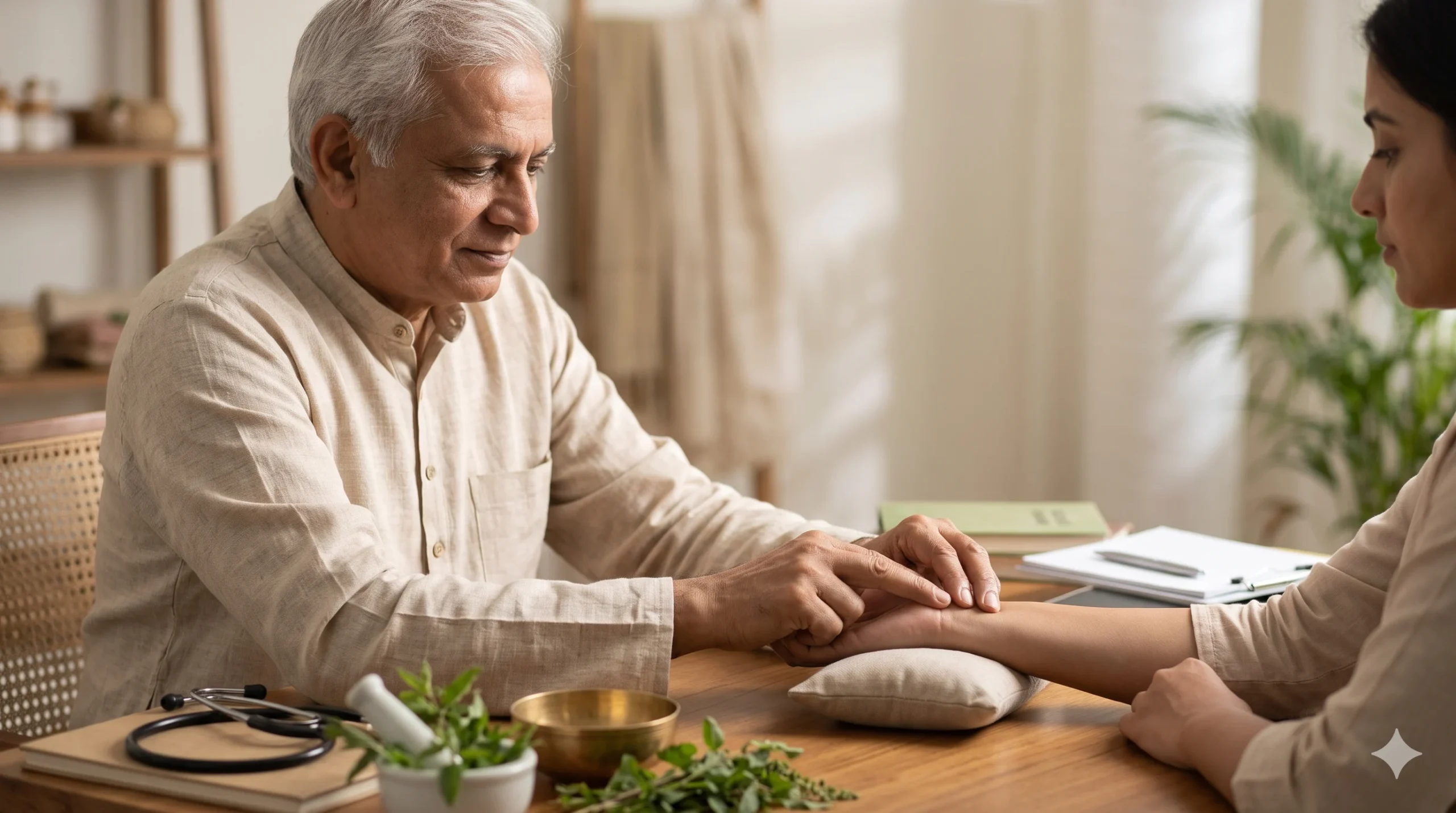
Pulse examination is far removed from merely counting beats per minute. A seasoned Vaidya places three fingers—index (Tarjani), middle (Madhyama), and ring (Anamika)—over the radial artery at the base of the thumb (Angusthamoola). Each finger isolates a primary biological force:
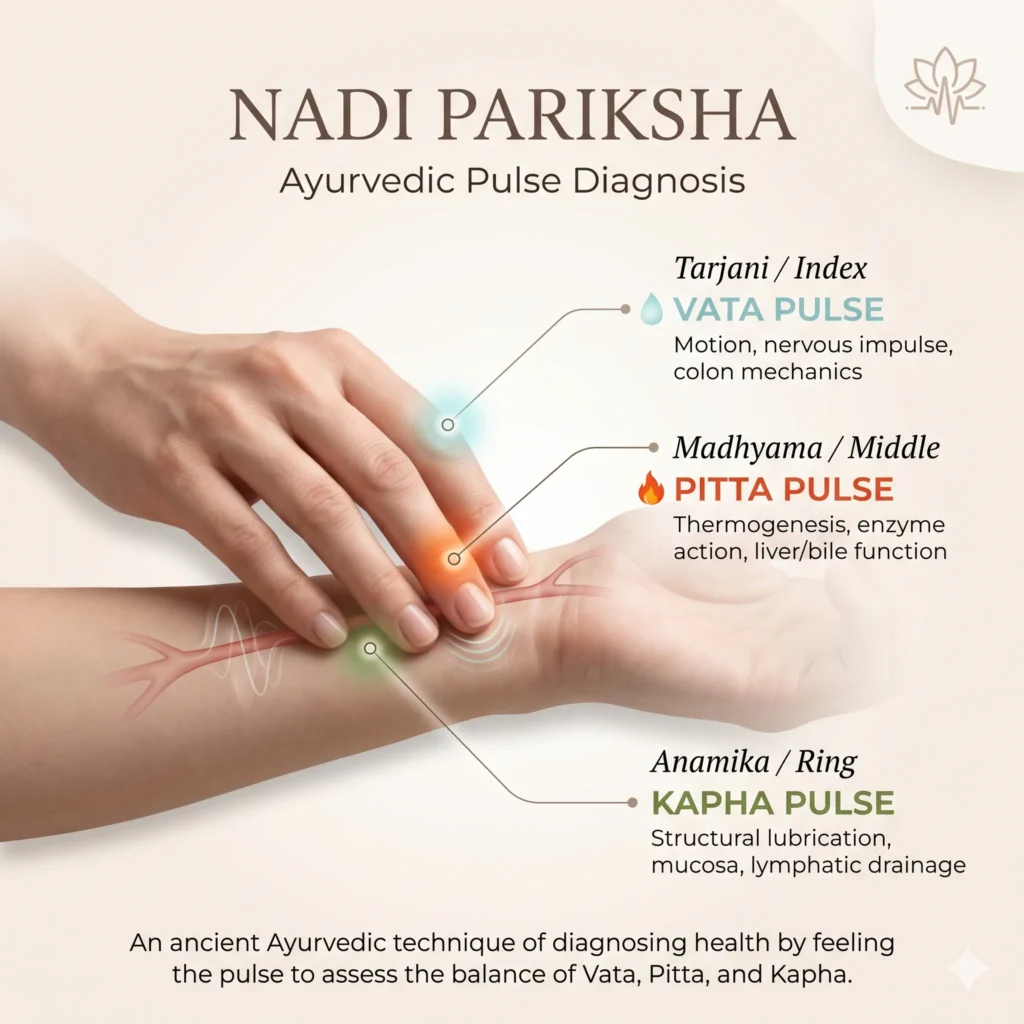
By calibrating palpation pressure across three distinct depths, the physician decodes different systemic layers:
-
Superficial Pressure (Prakriti & Active Vikriti): Reveals the immediate state of daily digestion, recent mental strain, and active atmospheric influences on bodily humors.
-
Intermediate Pressure (Dhatu Gati): Gauges how nourishment transitions through the seven tissue systems—from plasma (Rasa) to marrow and nervous tissue (Majja).
-
Deep Pressure (Moola Prakriti & Organ Reserve): Uncovers constitutional baseline reserves, long-standing toxic accumulation (Ama), and inherited tissue vulnerabilities.
Classical Pulse Waveforms vs. Modern Clinical Realities
| Dosha Dominance | Classical Gati (Movement) | Tactile Characteristics | What It Signals to a Vaidya |
| Vata | Sarpa (Serpentine / Cobra) | Quick, thin, irregular, cold, shifting rhythm | Dehydration, autonomic nervous hyper-excitability, gas distension, insomnia. |
| Pitta | Manduka (Frog / Hopping) | Sharp, jumping, hot, expansive, distinct pulse | Gastric hyperchlorhydria, inflammatory liver load, skin erythema, burning sensations. |
| Kapha | Hamsa (Swan) or Gaja (Elephant) | Slow, broad, heavy, rolling, smooth | Mucosal congestion, metabolic sluggishness (Mandagni), lymphatic stagnation, hypothyroid traits. |
Clinical Nuance: Why 45+ Years of Tactile Memory Is Irreplaceable
Textbooks instruct students on what a Sarpa Gati feels like; what they cannot convey is how that pulse alters when a 55-year-old patient from Kanpur’s densely packed commercial core has spent twenty years on anti-hypertensive medication while skipping meals.
Tactile mastery is muscle memory built over tens of thousands of individual wrists. An experienced finger feels the Gurutva (viscous heaviness) of circulating endotoxins (Ama) clinging to the vessel wall long before fasting blood sugar or lipid panels cross laboratory thresholds.
Practical Guidelines for Patients Visiting the Clinic
To ensure pure hemodynamic signals without artificial autonomic spikes:
-
Ideal Timing: Early morning (between sunrise and 10:00 AM) represents optimal biological homeostasis.
-
Fasting State: The patient must be empty stomach (Niranna) or maintain at least 3 to 4 hours of complete digestive rest. Drinking hot tea, coffee, or consuming heavy breakfast spikes blood flow and masks Pitta waveforms.
-
Prior Activity: Avoid brisk walking immediately before assessment. Sit quietly for 15 minutes in the clinic to normalize peripheral vascular tone.